

Cart
0
There are some sentences in India that almost automatically come with a mithai box.
“Good news hai.” — “Accha? Mithai kahan hai?”
No one needs to explain the connection.
A promotion, an engagement, a new home, a baby, a festival, a business milestone, an exam result or simply a visit to someone’s house — sweetness has become one of the ways Indians communicate happiness.
Long before gifting became an industry filled with catalogues, ribbons and curated boxes, families were already carrying mithai to one another.
That tradition has survived changing lifestyles for a simple reason: mithai does something most gifts struggle to do.
It can be opened immediately.
It can be shared with everyone in the room.
And within minutes, the gift becomes a moment.
At Janta Sweet Home, this is why gifting has never felt separate from mithai. The two have grown together through generations of celebrations.
Why Do Indians Gift Mithai?
Indian food traditions are closely tied to auspiciousness, hospitality and community.
Offering something sweet at a happy moment is a way of extending the happiness outward. Instead of good news remaining with one person, it is literally shared.
This is what makes mithai gifting different from many individual gifts.
A box of sweets rarely belongs to one person for very long.
It arrives at a home. Someone opens it. Someone calls the others. Everyone has a preference. One piece becomes two. The box moves around.
The gift becomes social.
And Indian celebrations have always been deeply social.
‘Muh Meetha Karo’ Is More Than a Phrase
The phrase “muh meetha karo” is so familiar that we rarely stop to think about what it represents.
It connects sweetness with a positive beginning.
When something good happens, we want to mark the moment. Food gives that moment a physical form.
A sweet can be tasted, shared and remembered.
That is why even in a world of instant messages and digital congratulations, people still send mithai when the news truly matters.
A message says congratulations. A mithai box says: this deserves to be celebrated.
That difference explains much of the tradition’s staying power.
Festivals: When Mithai Becomes Part of the Calendar
Indian festivals create their own rhythm of sweets.
Different seasons bring different cravings and traditions. Ghewar appears around monsoon festivities in Rajasthan. Janmashtami brings associations with makhan, mishri and milk-based preparations. Ganesh Chaturthi makes modak impossible to ignore. Diwali turns mithai gifting into a language of its own.
The sweet changes, but the gesture remains familiar.
We visit.
We carry something.
We share.
This seasonal variety is one reason Indian mithai culture never feels static. There is always another festival, another regional speciality and another family tradition waiting to return.
Weddings: When One Box Has to Carry a Lot of Emotion
Weddings show perhaps the most elaborate form of Indian sweet gifting.
Mithai may appear when a relationship is announced, during invitations, pre-wedding ceremonies, guest welcomes, return gifts and family exchanges.
Here, presentation begins to matter almost as much as selection.
The box is not simply food. It represents the family sending it.
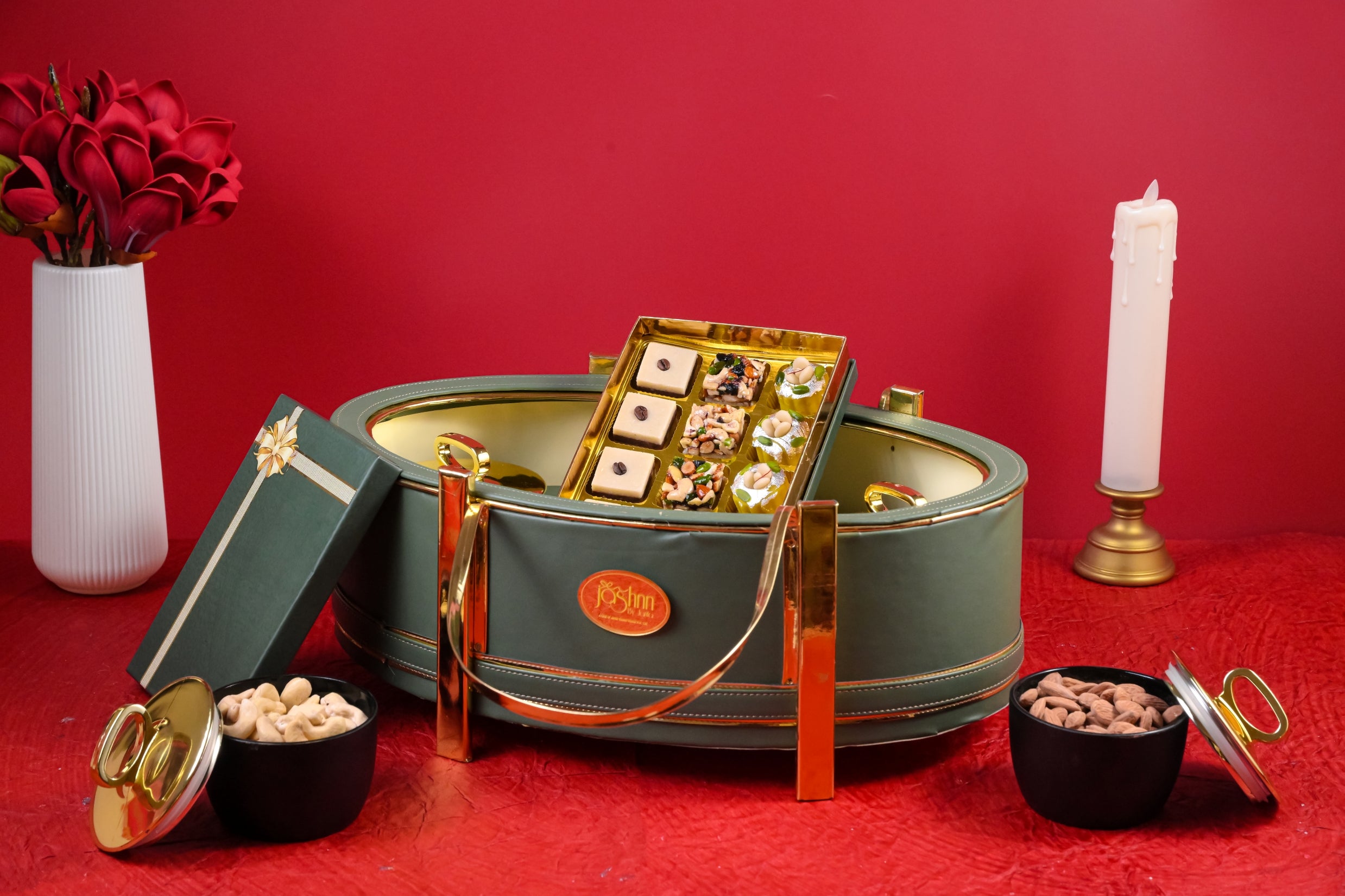
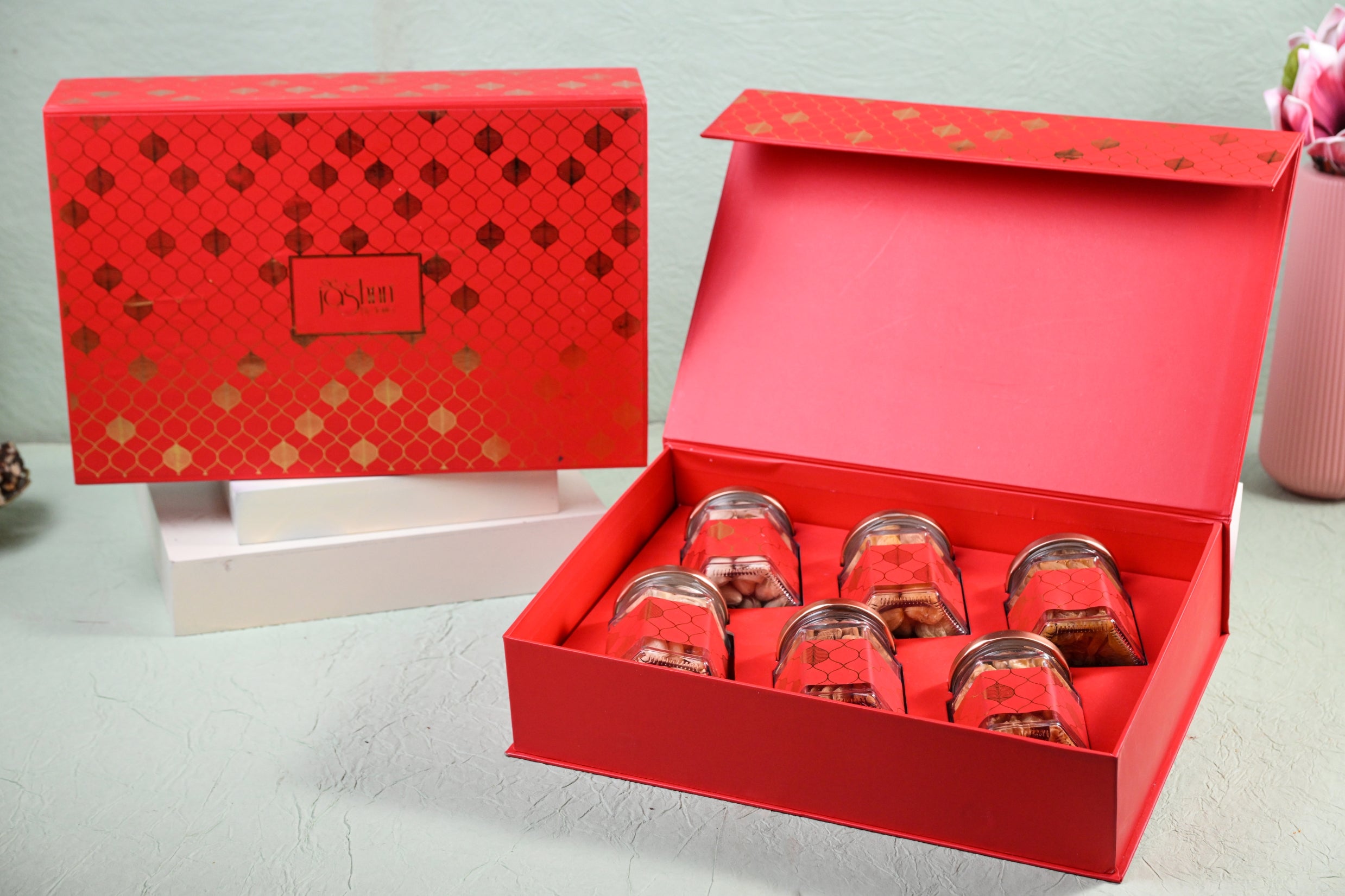
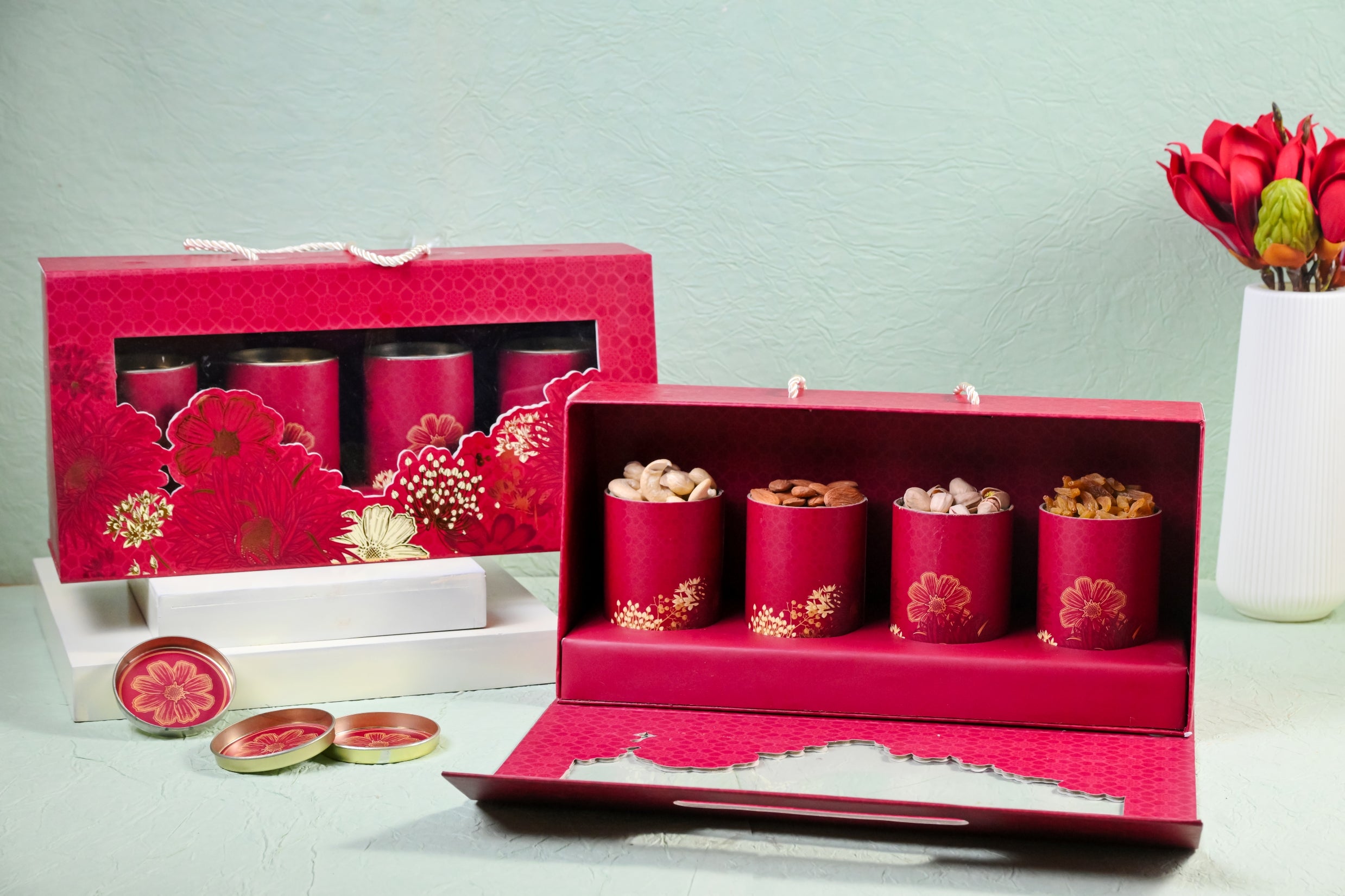
That is why wedding gifting has evolved toward thoughtfully curated hampers, customised boxes, ribbons, personalised details and combinations of mithai, dry fruits, chocolates and savouries.
For Jasshn by Janta, this is where traditional flavour and premium presentation can meet naturally: the emotion remains familiar, while the way it is presented can feel contemporary and personal.
Housewarmings, New Beginnings and the Sweetness of ‘Shubh’
A new home is not merely a new address in Indian culture. It is a beginning.
And beginnings have always had a close relationship with sweetness.
Whether someone is attending a griha pravesh, congratulating a new business owner or celebrating a professional milestone, mithai works because it does not demand that the recipient have a particular hobby, size, colour preference or taste in décor.
Almost everyone understands the gesture.
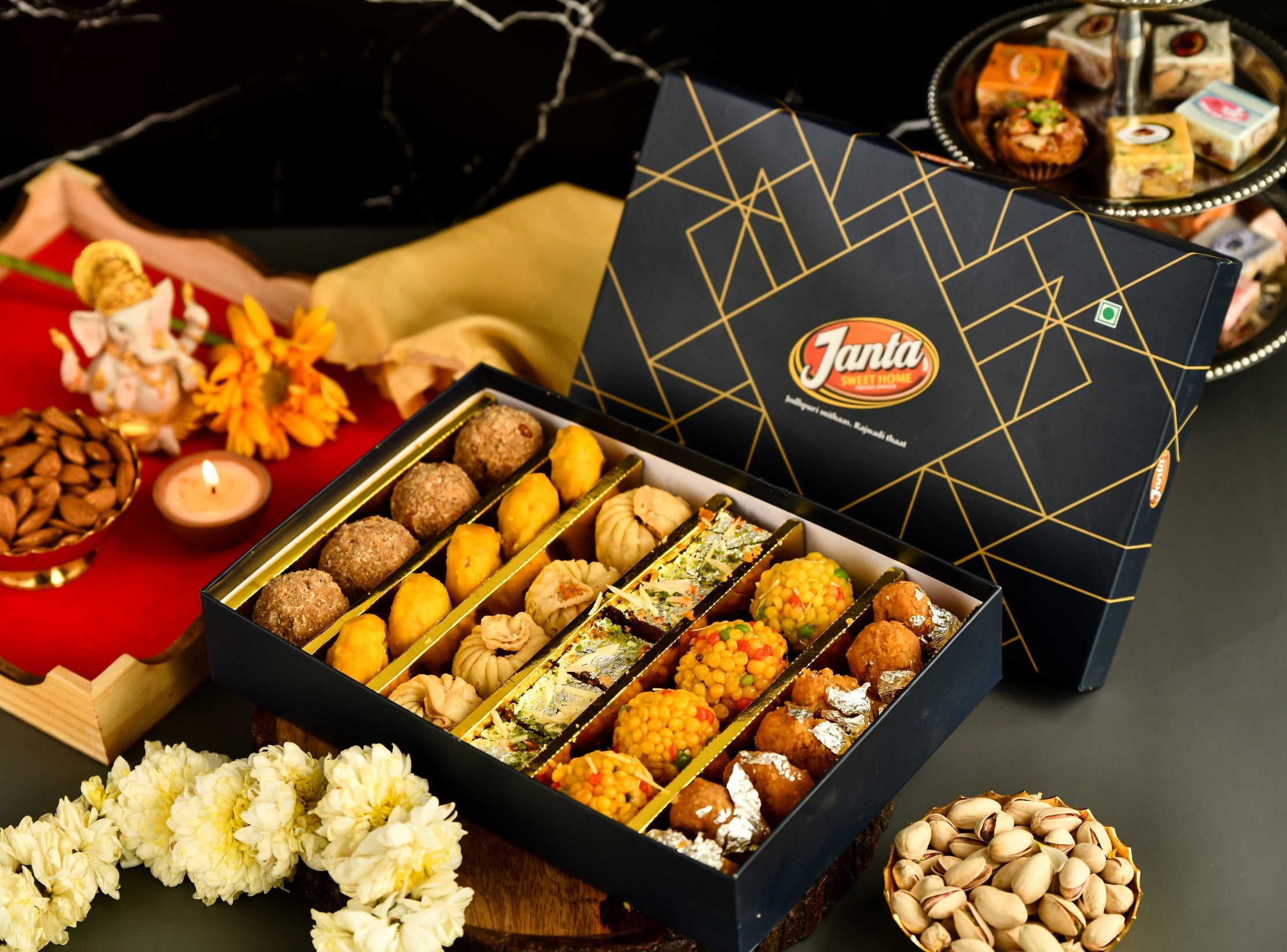
The real personalisation happens in the selection: their favourite Kaju Katli, a traditional laddoo assortment, regional specialities or a premium hamper designed for the occasion.
Corporate Gifting: Tradition Learns a New Language
Corporate gifting has changed dramatically, but mithai continues to hold its place.
Businesses now want gifts that feel polished, brand-appropriate and memorable. That has led to customised packaging, branded sleeves, personalised cards, logo detailing and premium combinations.
Yet the core idea is still remarkably traditional: mark an occasion by sharing something good.
A well-designed mithai hamper can work for Diwali gifting, employee appreciation, client milestones, project completions and festive greetings because it balances familiarity with presentation.
The key is restraint. Corporate gifting feels premium when the assortment is considered, the packaging is clean and the personalisation supports the gift rather than overwhelming it.
Why a Mithai Box Is One of the Few Gifts Everyone Can Share
Many gifts are designed for one recipient.
Mithai behaves differently.
It reaches the office and suddenly the team is involved.
It reaches a family and everyone has opened the box before the intended recipient has finished reading the card.
It reaches a wedding and becomes part of the larger celebration.
This shareability is not a limitation. It is the product’s greatest emotional advantage.
The gift does not end when the box is opened. That is when it begins.
Every person taking a piece participates in the occasion.
The Best Mithai Gifts Are Personal Without Being Complicated
Personalisation does not always require putting someone’s name on everything.
Sometimes it is much simpler.
Remember that they love Kaju Katli.
Know that their father always chooses laddoo.
Include savouries because the family prefers a sweet-and-salty combination.
Choose Ghewar because they wait for it every season.
Send Mawa Kachori to someone who misses Jodhpur.
These choices say, “I thought about you,” without needing a long explanation.
From Traditional Boxes to Curated Hampers
The visual language of gifting has evolved.
A classic mithai box still has its place, especially for everyday celebrations and family occasions. But premium gifting increasingly combines multiple experiences in one hamper.
· Traditional mithai for familiarity.
· Dry fruits for variety.
· Chocolates for a contemporary touch.
· Savouries for contrast.
· Personalised cards for emotion.
· Ribbons, sleeves or customised packaging for presentation.
The best hampers do not add items simply to look larger. They create a coherent experience around the recipient and the occasion.
This is where Janta’s traditional food expertise and Jasshn’s premium gifting language can work together particularly well.
Why Regional Sweets Make Gifting More Memorable
A gift becomes more distinctive when it carries a sense of place.
For Jodhpur, foods such as Mawa Kachori or other regional favourites can do something a generic gift cannot: they carry the city with them.
Someone living away from Rajasthan may receive a box and immediately remember home.
A visitor may take a local speciality back and introduce the flavour to someone else.
Regional sweets turn gifting into cultural storytelling.
They say not only, “I brought you something sweet,” but also, “I brought you a little of where I come from.”
How to Choose the Right Mithai Gift
Start with the occasion and the recipient.
· For family celebrations, prioritise familiar favourites and shareable assortments.
· For festivals, include seasonal or occasion-linked sweets where appropriate.
· For weddings, focus on presentation, consistency and customisation.
· For corporate gifting, choose polished packaging and practical assortments suited to multiple recipients.
· For someone living away from home, consider regional flavours with emotional relevance.
· For a mixed-preference household, combine sweets with savouries, chocolates or dry fruits.
Always consider freshness, travel time and storage when the gift is being delivered or carried to another city.
Why Mithai Gifting Has Not Gone Out of Fashion
Because the tradition is not really about fashion.
It is about participation.
Giving mithai allows us to enter someone else’s happy moment. Receiving it allows us to share theirs.
The packaging can evolve. The assortment can evolve. The way we order can evolve.
But as long as people continue to celebrate together, there will be room for something sweet on the table.
Some Feelings Are Still Best Said With Mithai
There are gifts that impress.
There are gifts that surprise.
And then there are gifts that feel immediately familiar.
Mithai belongs to the third category.
It has been present at Indian festivals, weddings, new beginnings and family milestones for generations because it turns emotion into something everyone can share.
At Janta Sweet Home, traditional mithai continues that everyday language of celebration. And through Jasshn, the same emotion can be elevated into curated hampers for weddings, festive occasions, corporate gifting and personal milestones.
Because sometimes the most Indian way to say “I’m happy for you” is still the simplest: open the box.
Explore traditional mithai and curated gifting from Janta Sweet Home and Jasshn for celebrations worth sharing.
Frequently Asked Questions
Why do Indians give sweets on happy occasions?
Mithai is traditionally associated with celebration, hospitality and auspicious beginnings in Indian culture. Sharing sweets allows good news or a festive moment to be shared with family, friends and guests.
Which sweets are good for gifting?
Kaju Katli, laddoos, barfi, dry-fruit sweets and regional specialities are common gifting choices. The best selection depends on the occasion and the recipient’s preferences.
Are mithai hampers suitable for weddings?
Yes. Wedding hampers can combine traditional sweets with dry fruits, chocolates, savouries and personalised packaging, depending on the event and gifting requirement.
Can mithai be used for corporate gifting?
Yes. Premium mithai and curated hampers are widely suited to festive corporate gifting, employee appreciation and client occasions, particularly when presentation and customisation are handled professionally.
How can I make a mithai gift feel personal?
Choose the recipient’s favourite sweets, include regional flavours with personal relevance, add a thoughtful card or use customised packaging where appropriate.


