

Cart
0
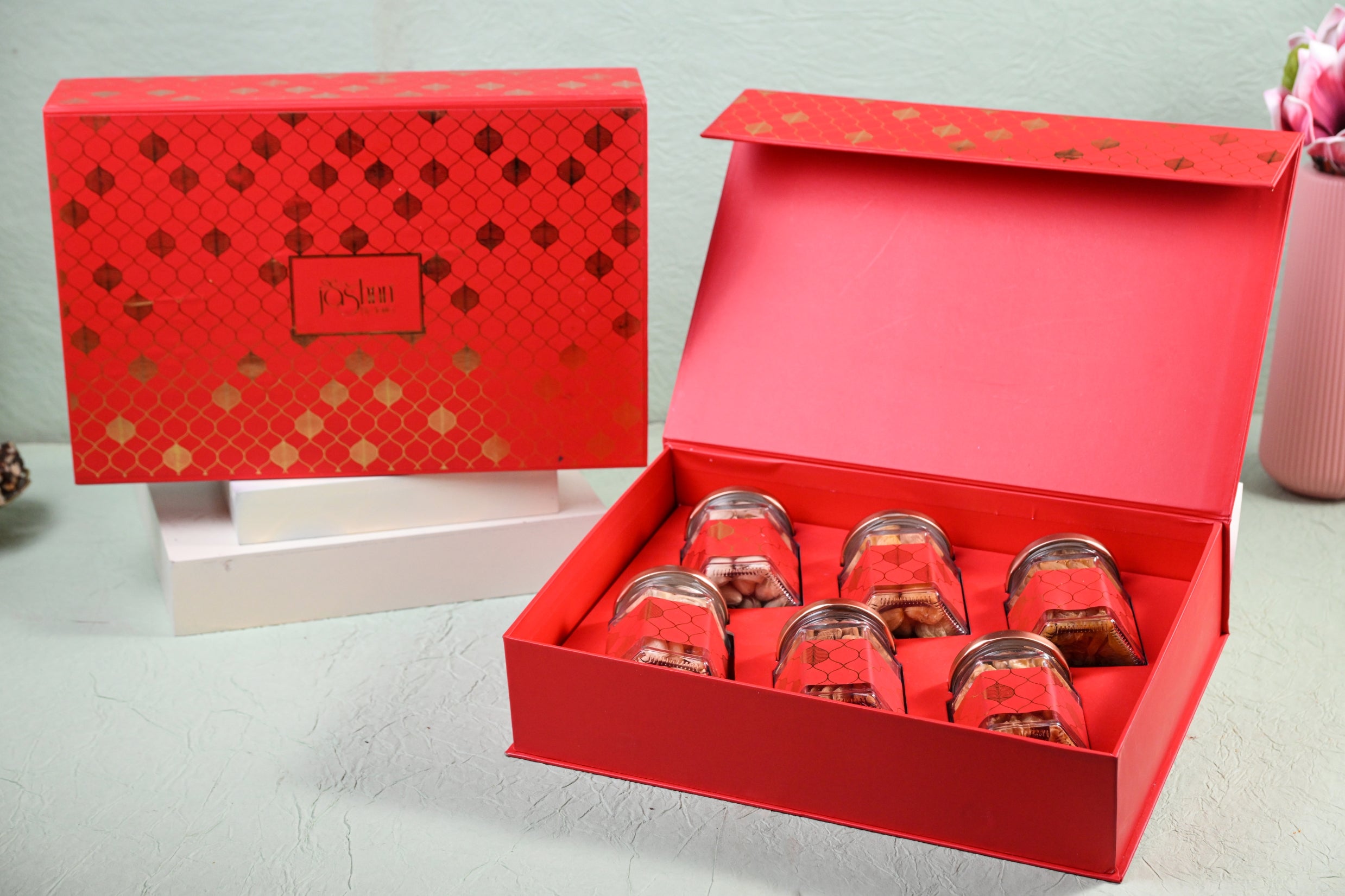
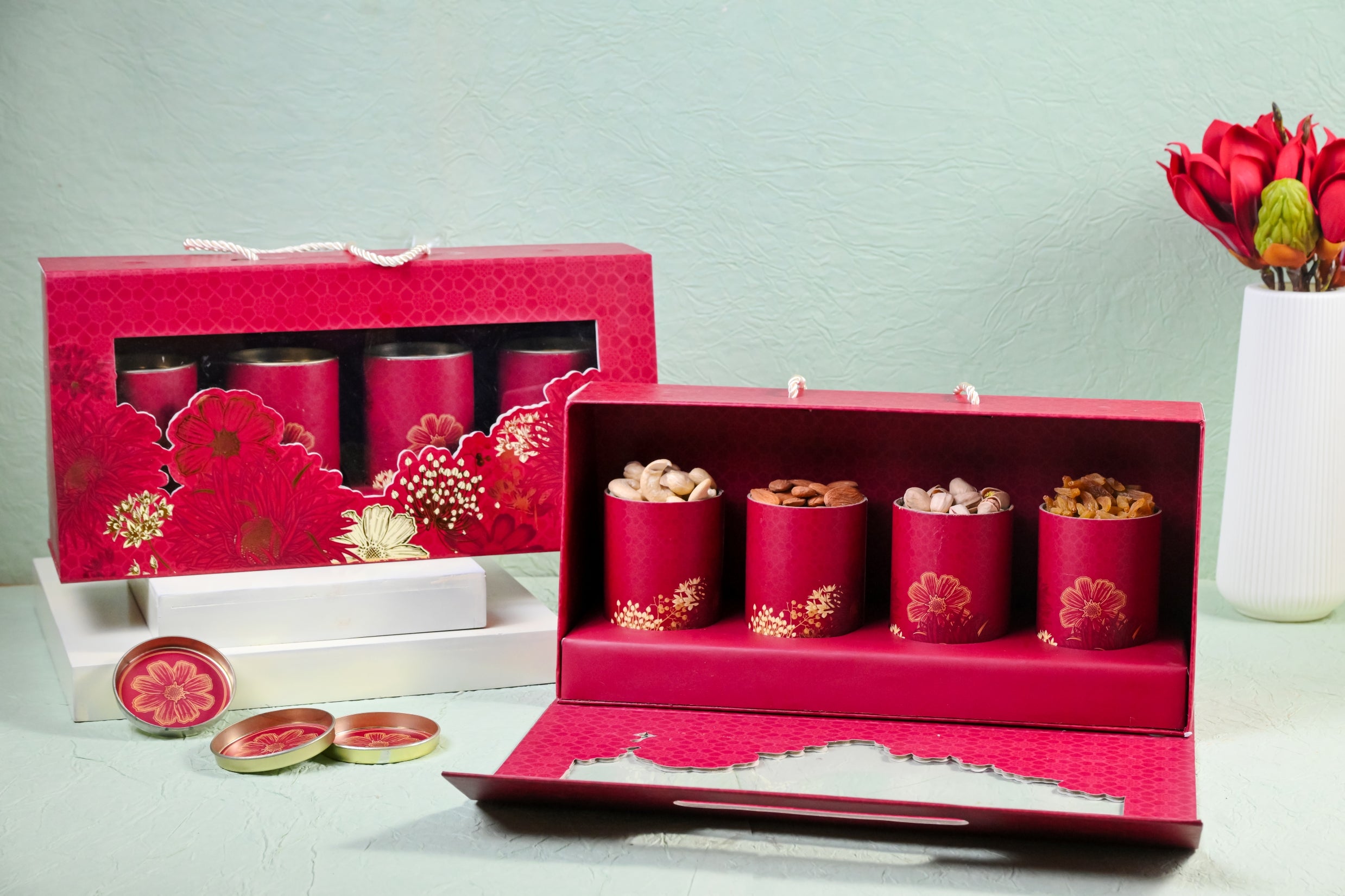
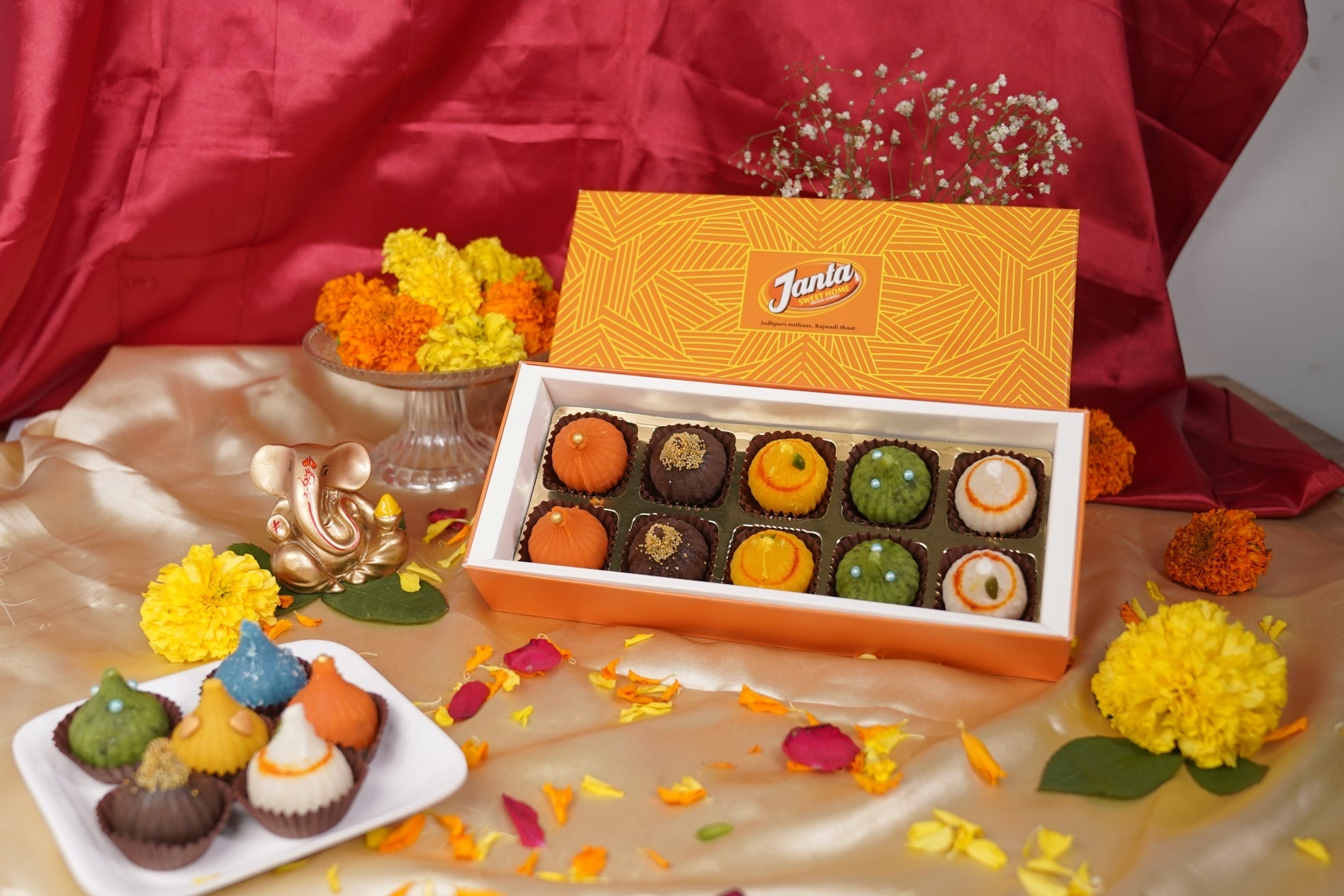
Every Indian festival seems to have one food that instantly gives it away.
Diwali has its boxes of mithai. Holi brings gujiya. Janmashtami makes us think of makhan and mishri.
And then there is Ganesh Chaturthi.
The moment someone says “Ganpati Bappa Morya”, somewhere nearby a plate of modaks cannot be too far away.
Ganesh Chaturthi celebrates Lord Ganesha, revered across India as the remover of obstacles and the deity associated with wisdom, auspicious beginnings and prosperity. In 2026, Ganesh Chaturthi falls on 14 September, making September a natural month for families to prepare their homes, puja spaces and festive menus.
Yet what makes the festival memorable is not only the decoration or the ritual. It is the way devotion enters everyday family life: the idol arriving home, children helping with flowers, someone preparing bhog, guests dropping in, and a plate of sweets waiting to be offered before anyone is allowed to touch it.
At Janta Sweet Home, that familiar relationship between celebration and mithai is what makes Ganesh Chaturthi especially meaningful. Because when Bappa comes home, something sweet usually arrives with him.
Why Is Ganesh Chaturthi Celebrated?
Ganesh Chaturthi marks the celebration of Lord Ganesha’s birth. Families and communities welcome Ganesha idols, perform puja, sing aartis, prepare offerings and, depending on local custom, conclude the celebration with visarjan.
Lord Ganesha is traditionally invoked at the beginning of auspicious occasions. That association with new beginnings makes the festival particularly warm: it is not simply a celebration of a deity, but a reminder to begin with faith, wisdom and good intent.
In many homes, food becomes part of that welcome. Bhog is prepared with care, offered first, and then shared as prasad. The act of sharing turns the festive table into something larger than a meal.
Why Is Modak Associated With Lord Ganesha?
Among all Ganesh Chaturthi sweets, modak has become the most recognisable.
Traditional stories and devotional culture closely associate Lord Ganesha with modak, which is why the sweet appears so prominently in Ganesh Chaturthi celebrations. Across regions, its form and preparation can change: some families prepare steamed versions, others fried versions, while sweet shops create festive interpretations for gifting and sharing.
What stays constant is the symbolism of offering something made with care.
A modak is not merely a festive sweet on Ganesh Chaturthi. It is one of the flavours through which people recognise the festival itself.
For children, it may simply be the sweet they are waiting to eat after puja. For adults, it can carry memories of celebrations at home, visits to temples and the familiar excitement of bringing Bappa home.
The Real Festival Begins Before the Puja
Ask any family that celebrates Ganesh Chaturthi at home and they will tell you: the festival begins before the official prayer.
It begins while cleaning the space where Bappa will sit. While deciding the flowers. While someone searches for last year’s decorations. While the family discusses what will be prepared for bhog.
And, inevitably, while someone asks what sweets are coming home.
These small moments are what give festivals their emotional texture. The grand ritual may happen at a particular hour, but the memory is built through dozens of ordinary moments around it.
That is why food matters so much. The aroma from the kitchen, the box placed carefully near the puja room and the first serving of prasad all become part of the celebration.
Modak May Be the Hero, but the Mithai Box Has a Supporting Cast
Ganesh Chaturthi does not have to be limited to one sweet. Families often enjoy a broader festive selection after the offering, especially when relatives and guests are visiting.
A traditional mithai assortment can bring together different textures and preferences: laddoos for the person who always reaches for one first, Kaju Katli for the classic mithai lover, milk-based sweets for those who prefer something rich and familiar, and dry-fruit sweets for festive gifting.
The point is not to crowd the table. It is to make the celebration generous.
One favourite for Bappa. Something for everyone else. And somehow, there is always room for one more piece.
At Janta Sweet Home, festive mithai can complement the ritual rather than compete with it. Modak can remain at the heart of the Ganesh Chaturthi story while the rest of the selection makes sharing easier when the house begins to fill with family and friends.
Why Indian Festivals Always Find Their Way Back to Mithai
There is a reason good news in India so often ends with the sentence, “Muh meetha karao.”
Sweetness has become a cultural language for happiness. New job? Mithai. New home? Mithai. Wedding fixed? Mithai. Festival at home? The box is already on its way.
Ganesh Chaturthi fits beautifully into that tradition because Lord Ganesha himself is associated with auspicious beginnings. Offering and sharing something sweet becomes a natural expression of that optimism.
This is also why traditional sweets remain relevant even when gifting trends change. Packaging becomes more premium. Assortments become more creative. Ordering becomes easier. But the emotion remains remarkably familiar.
Celebrating Ganesh Chaturthi in Jodhpur
Jodhpur has its own unmistakable rhythm when festivals arrive. Markets become busier, homes prepare for guests, temples see more activity and food becomes part of almost every conversation.
Ganesh Chaturthi may be celebrated differently from one household to another, but the Jodhpuri instinct to feed people generously needs little introduction.
A festive sweet box brought home can serve several moments at once: bhog according to family custom, prasad after puja, something for visiting relatives and a thoughtful box to carry when visiting another home.
For Janta Sweet Home, being part of these occasions is an extension of something the brand has done for generations: serving flavours that become associated with family memories.
How to Choose Sweets for Ganesh Chaturthi
Start with the way your family celebrates rather than with the size of the box.
· Choose modak when you want the most recognisable Ganesh Chaturthi sweet.
· Add traditional laddoos or familiar mithai when serving a larger family.
· Choose an assorted festive box when visiting friends or relatives.
· Consider premium packaging when the sweets are intended as a gift.
· For bhog, follow your family or temple customs regarding ingredients and preparation.
The best festive selection is not necessarily the largest. It is the one that fits naturally into your celebration.
A Festival Children Remember Differently
Adults may remember the aarti. Children often remember something else.
The flowers they were allowed to arrange. The tiny decoration they insisted on placing themselves. The sound of everyone saying “Ganpati Bappa Morya.” And, very importantly, when they were finally allowed to eat the prasad.
Years later, these details become nostalgia.
That is the quiet power of festive food. A familiar flavour can take someone back to a house, a person and a celebration from decades ago in a single bite.
Perhaps that is why preserving traditional festive flavours matters. We are not only serving the present celebration. We are creating something someone may remember in the future.
When Bappa Comes Home, Let Sweetness Come With Him
Ganesh Chaturthi is ultimately a festival of welcome.
We welcome Lord Ganesha. We welcome auspicious beginnings. We welcome family and friends into our homes. And we welcome the hope that obstacles become easier to cross with wisdom and faith.
Food simply gives that welcome a flavour.
So prepare the flowers. Arrange the diya. Bring the family together. Keep the modaks ready. And when the puja is complete, share the sweetness.
Because some celebrations begin with prayer — and become memories around the mithai box.
Celebrate Ganesh Chaturthi with Janta Sweet Home and bring home festive sweets made for bhog, sharing, gifting and the joy of welcoming Bappa.
Frequently Asked Questions
When is Ganesh Chaturthi in 2026?
Ganesh Chaturthi falls on Monday, 14 September 2026. Puja timings vary by location, so families should refer to a local panchang or temple guidance for the appropriate muhurat.
Why is modak offered to Lord Ganesha?
Modak is traditionally associated with Lord Ganesha and is widely offered during Ganesh Chaturthi. Its strong cultural connection with Ganesha has made it the festival’s most recognisable sweet.
Which sweets are good for Ganesh Chaturthi?
Modak is the classic choice. Families may also serve laddoos, Kaju Katli, milk-based mithai, dry-fruit sweets and assorted festive boxes depending on their customs and preferences.
Can sweets be gifted on Ganesh Chaturthi?
Yes. Festive mithai boxes can be shared with relatives, friends, colleagues and hosts. Choose an assortment and presentation suited to the recipient.
What should I choose for Ganesh Chaturthi bhog?
Bhog traditions differ between families and communities. Follow your household or temple customs, particularly regarding ingredients and preparation.


